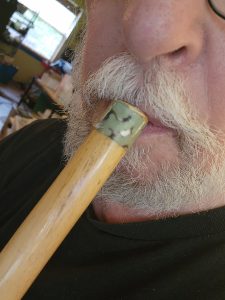
Suling (Indonesian) style cap ring
This Overtone flute is end-blown, with the breath diverted across an opening much as the Native American (NA) style of fipple (See previous post). I like to use a stabilized, printed heavy paper ring, in the place of a folded slip of cane or grass. I stabilize it with the same thin cyanoacrylate (CA) mentioned earlier, too. It is not glued in place, so it can be moved a little to favor certain harmonics. Or it can be removed entirely to be cleaned or even replaced.
The hole I prefer for the fipple (or sometimes called the sound-hole) tends to be oval in shape for most of my flutes now. Many people use a straight edge and this is common because it is said to produce a sharper sound delivery.
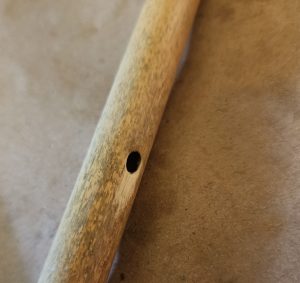
You can see the small gap in the ring above the fipple. This gap is really important to direct the air over the hole, and as I mentioned you can move it a little to direct the air more or less over the hole, which is undercut on the left, and a slight incline toward the right.
This is a delicate balance of the 3 features: the flattened ramp and bevel, the undercut and the ring that directs the air over the hole. When this is in balance, you will get a good sound from it.
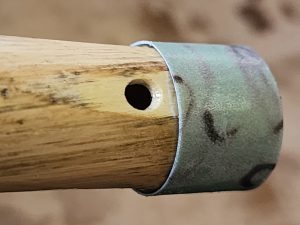
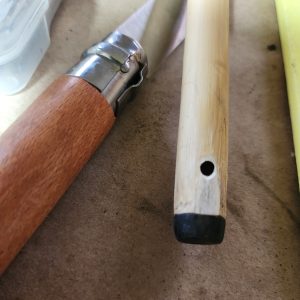 The end is capped off, so the diverted air only blow across the hole, that starts the resonance in the tube. You play by modulating your breath from very, very soft for the lowest note, to more and more pressure to raise the harmonics. An open-ended flute can be directed to much higher tones by covering it with your fingers: more or less modulates the frequency.
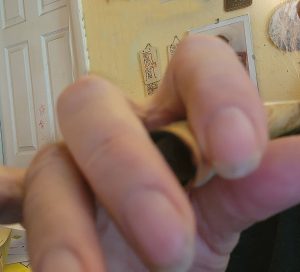
fingers modulate the higher overtones
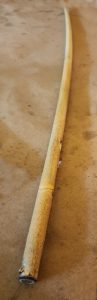
This is the flowering top of an Arundo Cane stalk. It is very long and hollow throughout. Seldom does it approach over a half inch in diameter, but it is very long and nearly hollow.
But the end might not even be open on some of the Overtone flutes. This does limit the range, but some finger holes may also be added above the end. There are many possibilities.
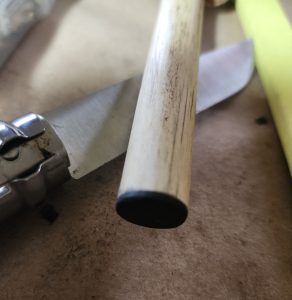
This is a piece of Ebony that closes off the end.
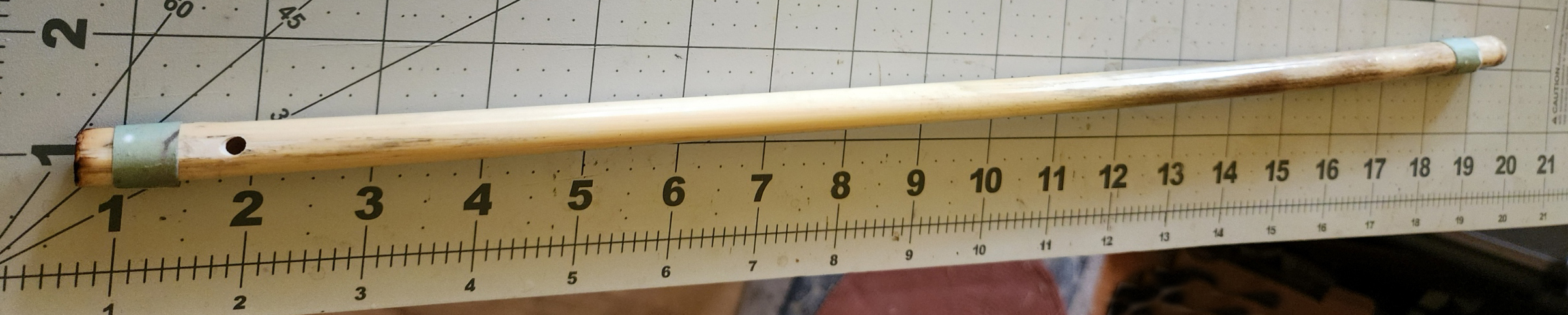
This is the full length of the flute. As you may notice, there are no finger holes on this one.


